
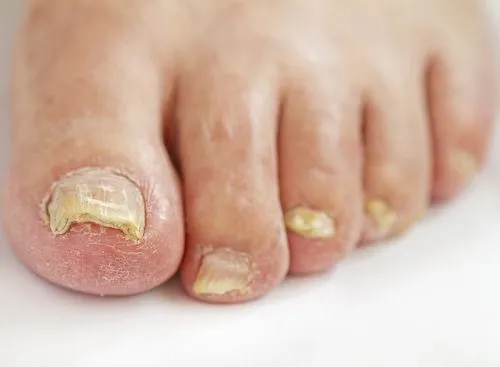
Fungal toenails develop when microorganisms enter through small openings in the nail or surrounding skin. Over time, infection can cause the nail to become thickened, discolored, brittle, or separated from the nail bed. Warm, moist environments make it easier for fungi to grow, which is why the condition is more common in those who wear tight shoes, walk barefoot in public areas, or have a history of athlete’s foot. At Libertyville Podiatry in Libertyville, IL, Dr. Daniel Surowiec and Dr. Jared Hart evaluate toenail changes to identify infection early and recommend treatment that restores nail health.
Signs and Symptoms to Watch For
When a fungal infection first develops, it often starts as a small white or yellow spot near the edge of the nail. As the infection spreads deeper, the nail can become thicker, lose its natural shine, and take on a brittle or powdery texture. Many patients also notice an unusual odor around the affected toes or feel discomfort when wearing shoes because the nail no longer sits flat. Since fungal nail infections usually progress slowly over time, early detection gives patients a better chance of successful treatment. Any recent changes in color, thickness, or texture should be evaluated so the cause can be identified and further spread to other nails can be prevented.
Treatment Options for Clearer Nails
Treatment depends on the severity of infection and how many nails are involved. Topical antifungal medications may be recommended for mild cases, especially when the infection is still near the surface. For infections that have progressed deeper into the nail, oral antifungal medications may be used to support a more complete response. Your podiatrist may also suggest professional nail care to remove thickened areas of the nail and support better penetration of medication. Consistent treatment is important because fungal organisms grow slowly and deeply within the nail.
Preventing Reinfection
Fungal toenails often return if the source of infection is not addressed. Sanitizing footwear, wearing moisture-wicking socks, and avoiding barefoot exposure in public areas can lower the risk of recurrence. For patients with a history of repeated infections, routine podiatric care helps monitor nail health and protect against future issues.
